What is OCR for data extraction?
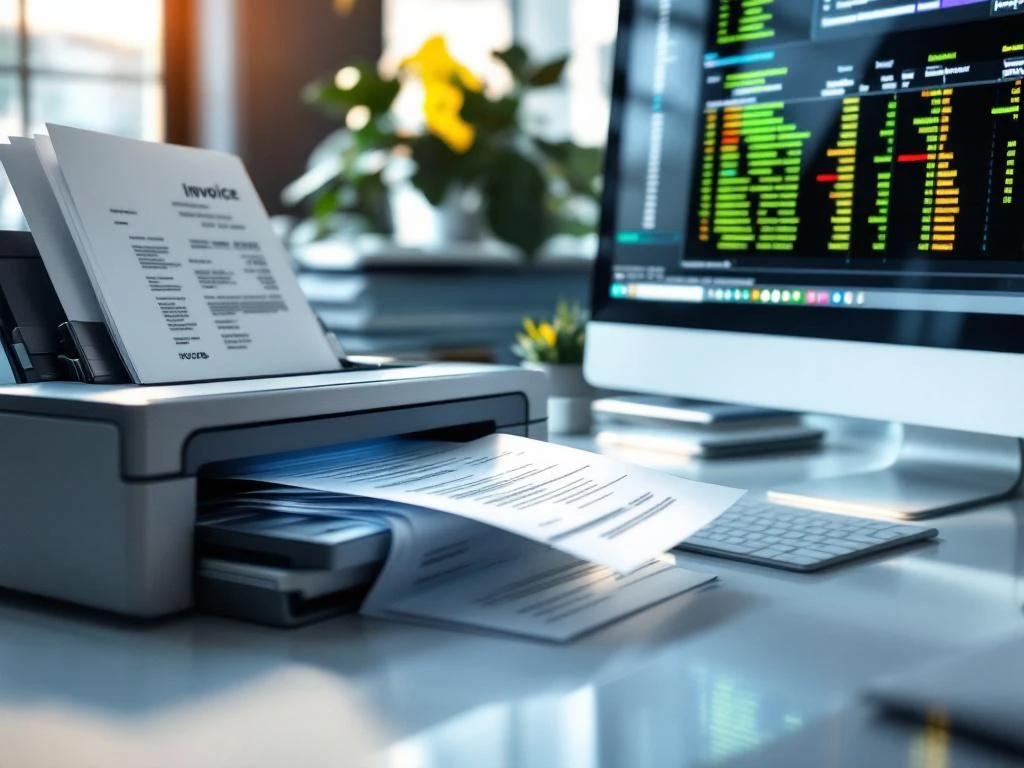
OCR (Optical Character Recognition) is a technology that converts printed or handwritten text from images and documents into machine-readable digital text. This powerful tool transforms physical documents into searchable, editable data that businesses can process automatically. OCR enables organisations to extract valuable information from invoices, contracts, forms, and other documents without manual data entry, making it essential for modern data extraction workflows.
What is OCR and how does it transform images into usable data?
OCR technology scans visual text from images, PDFs, and scanned documents, then converts these characters into digital text that computers can read, search, and manipulate. The system analyses the shapes and patterns of letters, numbers, and symbols to recognise what they represent as text.
The transformation process begins when OCR software receives an image containing text. Advanced algorithms examine each character's visual features, comparing them against known letter and number patterns. Modern OCR systems use machine learning models trained on millions of text samples to achieve high accuracy rates across different fonts, languages, and document types.
This technology bridges the gap between physical documents and digital systems. Once text is extracted, businesses can integrate it into databases, search through document archives, or trigger automated workflows based on specific content. The converted text maintains its original meaning while becoming fully searchable and processable by other software applications.
How does OCR technology actually work for data extraction?
OCR data extraction follows a systematic four-step process: image preprocessing, character segmentation, pattern recognition, and text conversion. Each stage refines the input to produce accurate digital text output.
The process starts with image preprocessing, where the system enhances image quality by adjusting contrast, removing noise, and correcting skew. This preparation ensures optimal conditions for character recognition. Next comes character segmentation, where the software identifies individual letters, words, and text blocks within the document layout.
Pattern recognition represents the core OCR function. Here, machine learning algorithms analyse each character's shape, comparing it against trained models to determine the most likely match. Modern systems consider context clues, such as surrounding letters and common word patterns, to improve accuracy.
The final conversion stage transforms recognised patterns into standard text formats like ASCII or Unicode. Quality assurance checks verify the output accuracy, flagging uncertain characters for review. Advanced OCR systems can achieve over 99% accuracy on high-quality documents, making them reliable for automated data collection processes.
What types of documents and data can OCR extract information from?
OCR technology processes a wide range of document types, including invoices, receipts, contracts, forms, certificates, handwritten notes, printed books, and various image formats like JPEG, PNG, and TIFF files. Each document type presents different challenges and accuracy levels.
Structured documents like invoices and forms typically yield the highest accuracy rates because they follow predictable layouts. OCR systems can easily locate specific data fields such as dates, amounts, and reference numbers. Receipts and financial documents also work well, though varying print quality can affect results.
Handwritten documents present greater challenges, but modern OCR handles them increasingly well. Printed materials from books, magazines, and reports generally achieve excellent recognition rates, especially with clear fonts and good image quality.
The technology also processes multi-format inputs, including scanned PDFs, smartphone photos of documents, and screenshots. However, accuracy varies significantly based on factors like image resolution, lighting conditions, and document condition. Complex layouts with multiple columns, tables, or mixed text and graphics require more sophisticated OCR solutions to maintain proper data structure during extraction.
What are the main challenges and limitations of OCR for data extraction?
OCR accuracy faces several challenges, including poor image quality, complex fonts, irregular document layouts, handwriting variations, and language limitations. These factors can significantly impact extraction results and require specific strategies to overcome.
Image quality issues represent the most common problem. Blurry photos, low-resolution scans, poor lighting, or damaged documents can cause character misrecognition. Skewed or rotated images also reduce accuracy, though modern OCR systems include automatic correction features.
Font complexity creates another significant challenge. Decorative fonts, very small text, or unusual typefaces may confuse recognition algorithms. Handwriting presents even greater difficulties due to individual writing styles, though this continues to improve with machine learning advances.
Document layout complexity affects extraction quality when dealing with multi-column text, tables, or mixed content formats. The OCR system must correctly identify reading order and maintain proper data relationships. Language limitations also apply, as OCR accuracy varies significantly between languages, with some scripts proving more challenging than others.
To improve results, ensure high-quality source images, use consistent document formats where possible, and implement quality-checking processes. Many organisations combine OCR with human verification for critical data extraction tasks.
How do businesses benefit from implementing OCR data extraction?
Businesses gain significant advantages through OCR implementation, including automated document processing, reduced manual data entry, improved accuracy, faster processing times, substantial cost savings, and enhanced searchability of document archives. These benefits transform operational efficiency across multiple departments.
Automated processing eliminates the need for staff to manually type information from documents. This automation allows employees to focus on higher-value tasks while OCR handles routine data extraction. Processing speeds increase dramatically, with OCR systems handling hundreds of documents per hour compared to manual processing rates.
Accuracy improvements occur because OCR reduces human errors associated with manual data entry. While OCR isn't perfect, consistent algorithms often outperform tired or distracted human operators, especially for routine document types.
Cost savings emerge from reduced labour requirements and faster processing cycles. Many businesses see a return on investment within months of implementation. Additionally, OCR makes historical document archives fully searchable, enabling staff to locate specific information instantly rather than spending hours reviewing physical files.
The technology also enables better compliance and audit capabilities by automatically extracting and cataloguing important document information. This systematic approach to data collection ensures nothing important gets overlooked while maintaining proper documentation standards.
How Openindex helps with OCR data extraction solutions
We provide comprehensive OCR and data extraction services designed to handle large-scale document digitisation projects across multiple industries. Our solutions combine advanced OCR technology with custom API integration options to meet specific business requirements.
Our OCR capabilities include:
- Automated document processing for invoices, contracts, and forms
- Custom OCR solutions tailored to specific document types and layouts
- API integration for seamless connection with existing business systems
- Bulk document processing for archive digitisation projects
- Quality assurance processes to ensure extraction accuracy
- Support for multiple languages and document formats
We specialise in handling complex data collection challenges where standard OCR solutions fall short. Our technology processes millions of documents efficiently while maintaining high accuracy standards. Whether you need to digitise historical archives or automate current document workflows, we provide scalable solutions that grow with your business needs.
Ready to transform your document processing with advanced OCR technology? Contact us about OCR solutions or discover how we can streamline your data extraction requirements and document workflows.